The Monetary Matters Network
Fertilizer Nightmare Threatens Global Food Systems | Josh Linville on Iran War’s Fertilizer Shock
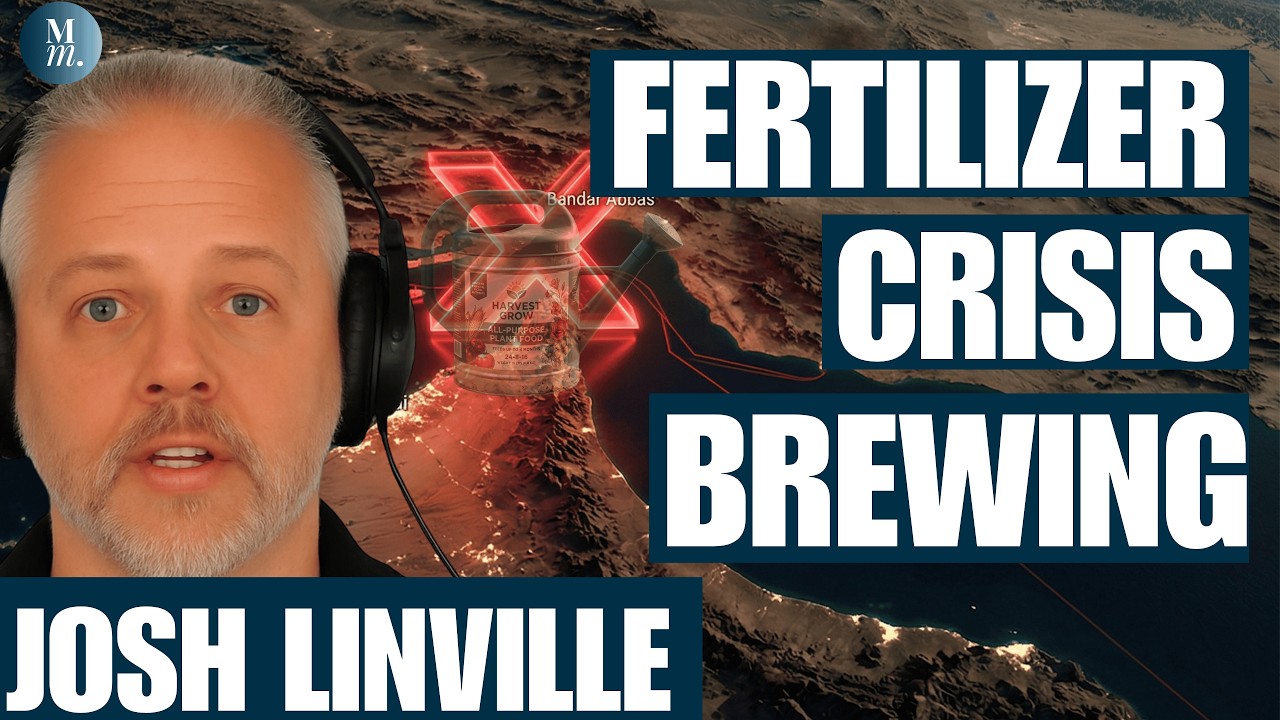
Most Important Insight
The potential closure of the Strait of Hormuz represents a 'fertilizer cliff' that would immediately jeopardize 20% of global urea trade, potentially reducing global grain yields by 30% within a single growing season.
Most Original Insight
Fertilizer has transitioned from a cyclical commodity to a primary geopolitical weapon more potent than oil, as soil nutrient depletion lacks the immediate strategic alternatives available to the energy sector.
Key Points
- Iran's strategic position allows it to disrupt the flow of nitrogen-based fertilizers and the natural gas feedstocks essential for global production.
- Natural gas price volatility in Europe and Asia is expected to keep nitrogen fertilizer floors elevated through the remainder of 2026.
- China is likely to extend its phosphate export quotas through 2027 to prioritize domestic food security, further tightening global supply.
- A massive shift in North American acreage from corn to soybeans is anticipated for the 2027 planting season due to the prohibitive cost of nitrogen inputs.
- The collapse of 'just-in-time' logistics in the fertilizer supply chain necessitates a permanent shift toward high-cost 'just-in-case' inventory buffering by agricultural cooperatives.
- Morocco's dominance in phosphate reserves makes it the most critical geopolitical pivot point for Western agricultural stability over the next decade.
- The decoupling of fertilizer prices from traditional energy correlations suggests a structural repricing of the entire global food value chain.
Investment Implications
| Asset / Sector / Instrument | Action | Source | Notes |
|---|---|---|---|
| CF Industries (CF) | BUY | implicit | As a North American nitrogen producer with access to lower-cost Henry Hub gas, they benefit from global price spikes caused by Middle East disruptions. |
| Nutrien (NTR) | BUY | implicit | Diversified exposure to potash and nitrogen provides a hedge against specific regional supply shocks in the Persian Gulf. |
| Mosaic (MOS) | BUY | implicit | Tightening phosphate markets due to Chinese export restrictions directly benefit Mosaic's market share and pricing power. |
| Soybean Futures | BUY | implicit | Lower nitrogen requirements make soybeans a more attractive and stable option for farmers facing high fertilizer costs. |
| Natural Gas (Henry Hub) | BUY | implicit | Increased demand for domestic feedstock to replace disrupted international nitrogen production will support prices. |
| Corn Futures | SELL | implicit | High input costs for nitrogen-heavy crops like corn will likely squeeze farmer margins and lead to reduced acreage in 2027. |
Hang on a sec…
- The claim that global grain production could drop by 30% in one year is likely hyperbolic, as it ignores the ability of farmers to 'mine' existing soil nutrients for one or two seasons with only moderate yield declines.
- The assertion that Iran can effectively and permanently close the Strait of Hormuz underestimates the likelihood of a massive, coordinated international military intervention to restore trade for essential commodities.
- The prediction that fertilizer prices will never return to pre-2024 levels ignores the historical tendency for high prices to induce significant new production capacity, particularly in North America and Africa.